MACHAΩN™
TACTICAL MEDICINE ACADEMY · DIGITAL E-LEARNING
MEDICAL LINEAGE

Heroes of medicine

Mythological healers and figures from medical history behind the MACHAΩN name and imagery.

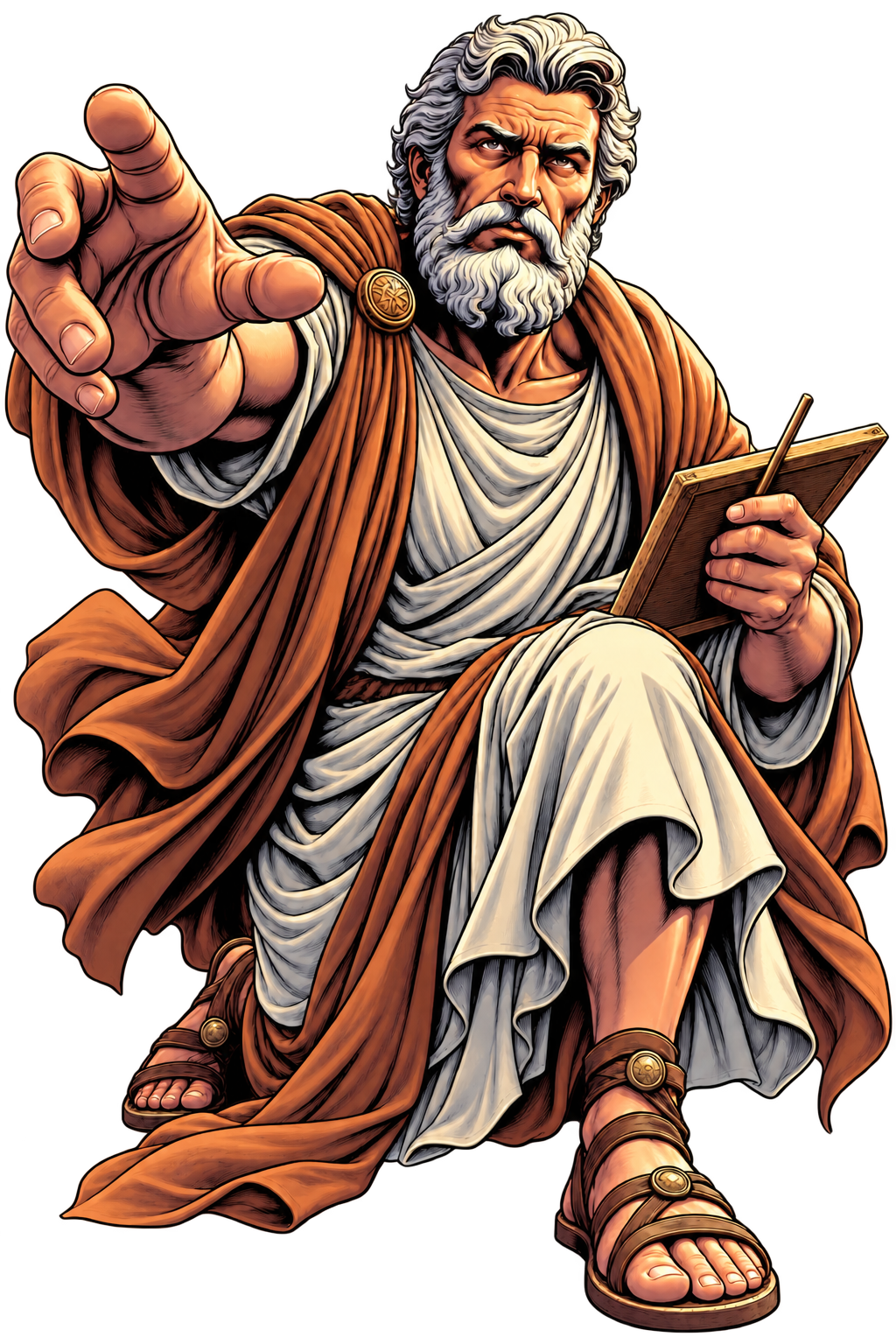
Artistic portrait of Machaon
I

Machaon

Healer-warrior of Troy

Homer’s kings are seldom short of advice. When Menelaus is wounded, however, Agamemnon sends for Machaon. There is work to be done, and the army needs someone who knows how to do it. This is the healer-warrior from whom MACHAΩN takes its name.

In the Iliad, Machaon and his brother Podalirius are sons of Asclepius, skilled in healing and commanders of the contingent from Tricca, Ithome and Oechalia. They bring thirty ships to Troy. Their place in the poem belongs to heroic legend; it gives us an ancient literary portrait of medicine within an army, rather than a biography we can independently verify.

Book IV brings Machaon into the circle of commanders surrounding Menelaus. He draws the arrow from the king’s belt, removes the armour covering the injury and attends to the wound. Homer traces his remedies through Asclepius to Chiron, the centaur: medical knowledge has a lineage, passed from teacher to pupil. Meanwhile, the Trojans advance. The poem allows the healer his moment, but the fighting will not wait for him to finish.

In Book XI, Machaon himself is struck in the right shoulder by an arrow from Paris. Idomeneus urges Nestor to get him into the chariot and back to the ships. His reason is wonderfully practical: in Samuel Butler’s translation, “A physician is worth more than several other men put together”. The army fears losing the man who can treat its wounded. Nestor drives him away from the battle, and the healer becomes a patient dependent upon his comrades.

These two scenes give the academy its namesake: a practitioner summoned when skill is needed, exposed to the same dangers as those around him. His importance becomes clearest when he can no longer work. For MACHAΩN, that is the enduring force of the story. An army may celebrate its champions at length; Homer also makes room for the person it cannot afford to lose when those champions are wounded.

Primary text: Homer, Iliad, Samuel Butler translation, Internet Classics Archive at MIT. Book II: the brothers and their contingent; Book IV: Menelaus wounded; Book XI: Machaon wounded.

Artistic portrait of Asclepius
II

Asclepius

Ancient symbol of healing

Asclepius stands at the meeting of Greek legend and religious life. Homer names him as the physician whose sons, Machaon and Podalirius, serve at Troy. In the later healing cult, he is worshipped as a god, with sanctuaries where the sick come seeking relief.

At Epidaurus, that hope acquired architecture: a temple, places for ritual sleep, and facilities for those seeking healing. Sleeping in the sanctuary formed part of the religious practice. The surviving buildings and inscriptions preserve something of a world in which bodily suffering and appeals to divine help shared the same address.

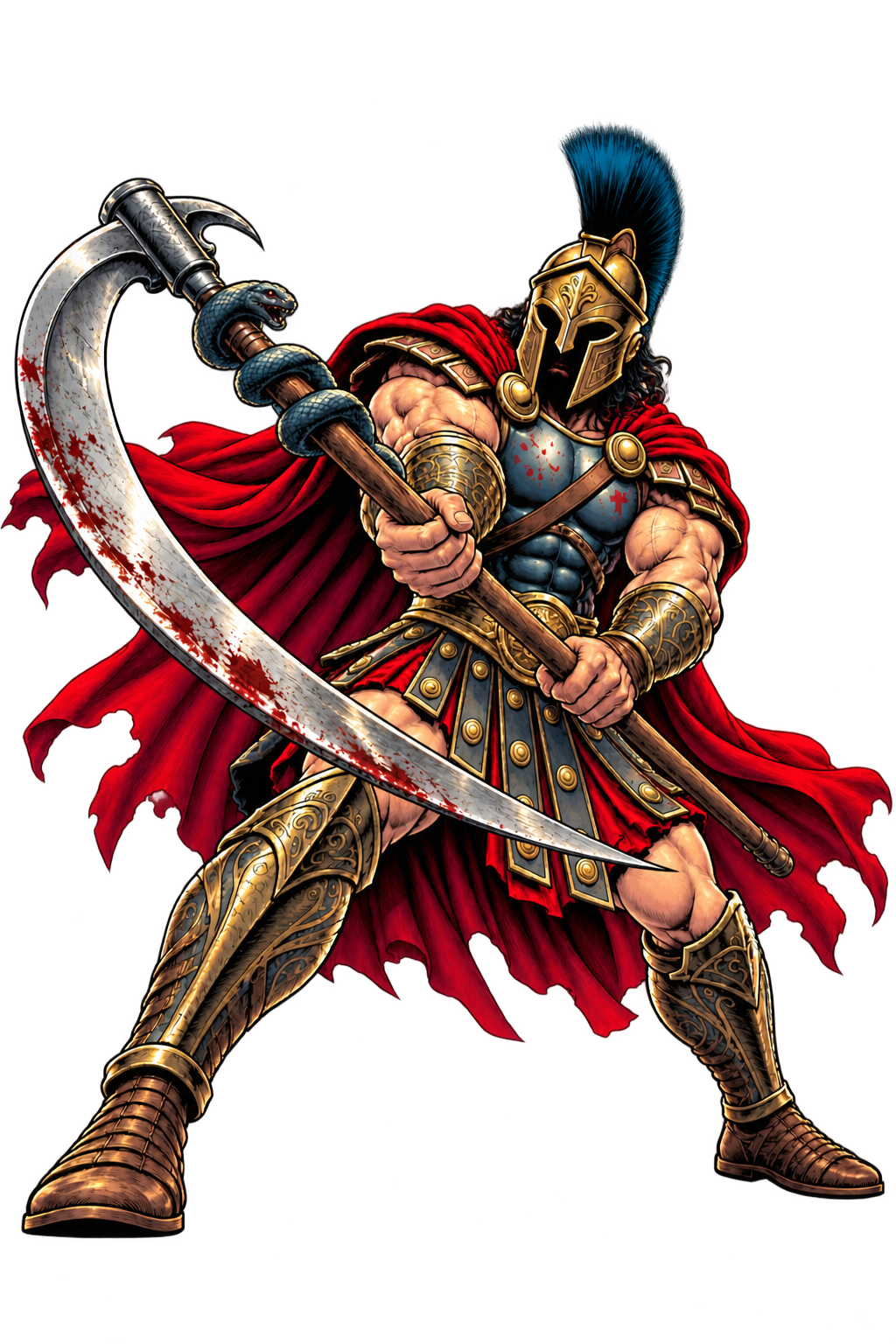
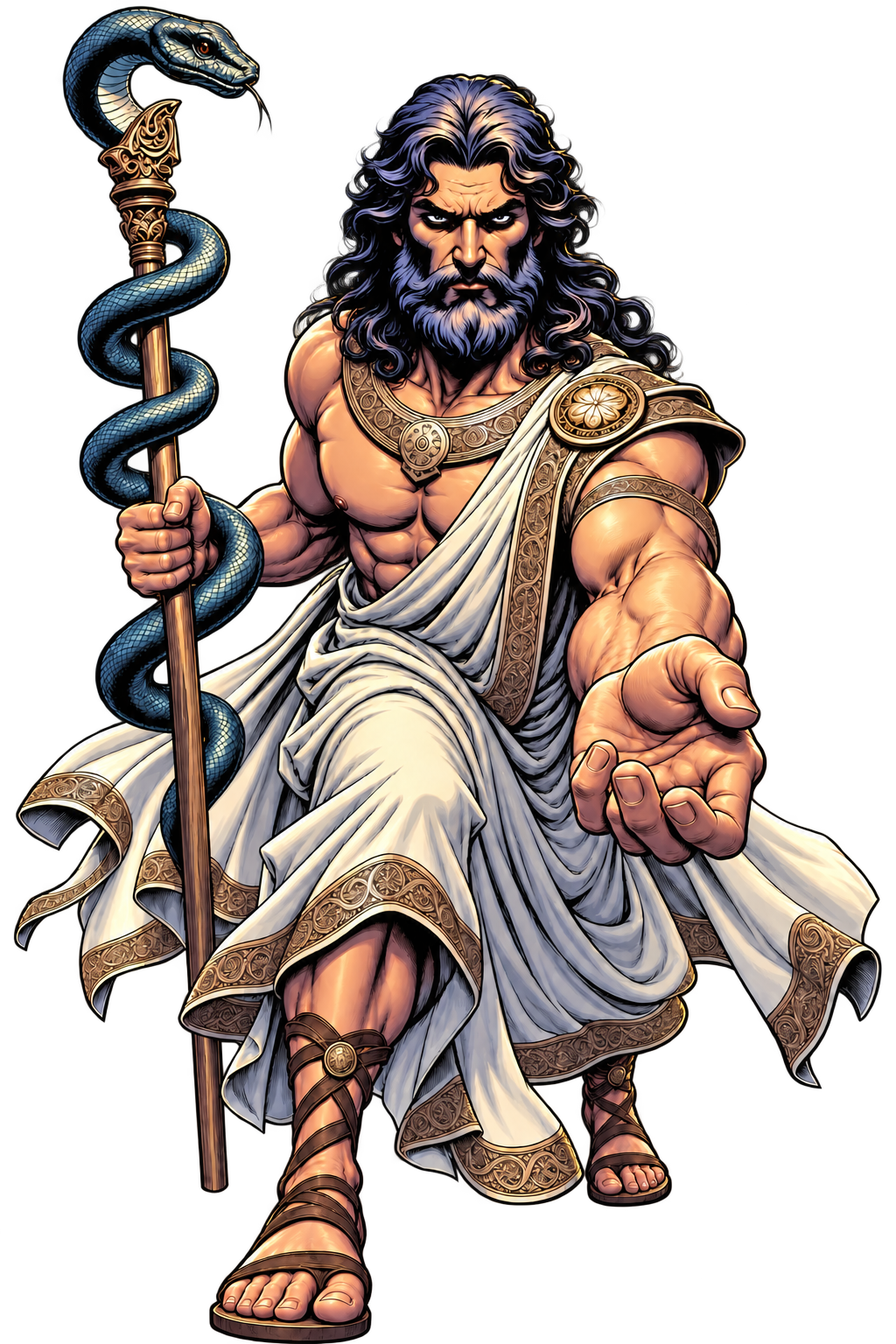
His familiar attribute is a staff entwined by a single serpent. The winged staff with two snakes belongs to Hermes, a distinction often lost in modern medical emblems. MACHAΩN’s Scythe & Serpent mark draws on the serpent’s association with healing; the combined emblem is the academy’s own.

Sources: Homer, Iliad, Book II; UNESCO: Epidaurus; Science Museum Group: the symbols of medicine.

Artistic portrait of Hippocrates
III

Hippocrates

Observation, ethics and clinical thought

Hippocrates of Kos has acquired a formidable posthumous workload. Around sixty medical works survive under his name, although the Hippocratic Corpus is the work of several authors across different periods. Its disagreements are part of its interest: here are physicians attempting to explain illness, sometimes arriving at incompatible answers.

One especially striking treatise, On the Sacred Disease, argues that epilepsy has a natural cause. Its author challenges those who turn an unfamiliar illness into evidence of divine intervention. The explanation offered belongs to ancient physiology, but the demand for an explanation grounded in nature is unmistakable.

The Oath adds obligations to the patient, the teacher and the profession, including the duty to keep private what is learned in practice. The famous injunction “First, do no harm” does not appear in it verbatim. Even medicine’s best-known ancestor deserves to be read before he is quoted.

Sources: National Library of Medicine: the Corpus and the Oath; On the Sacred Disease, Francis Adams translation.

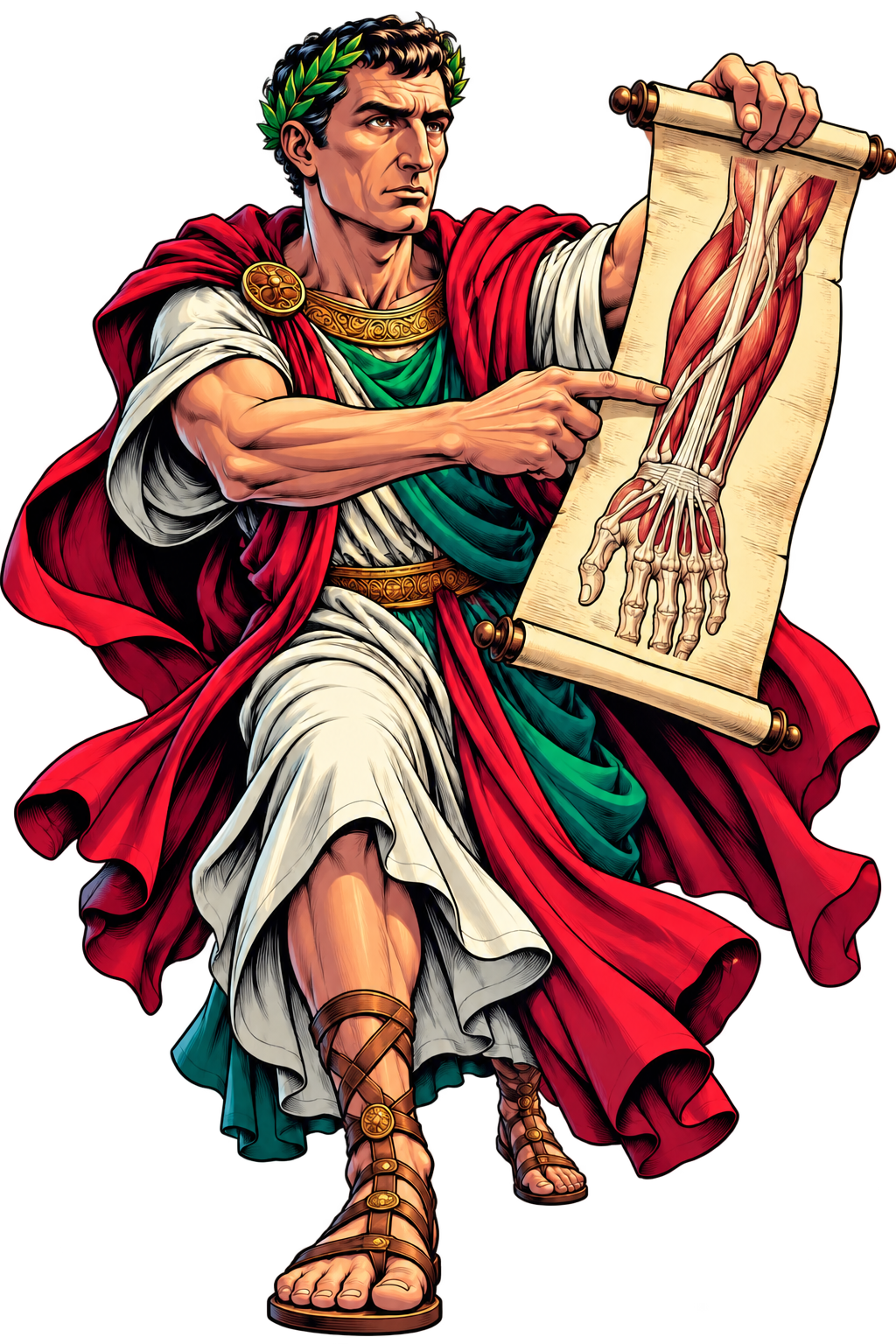
Artistic portrait of Galen
IV

Galen

Anatomy, physiology and the Roman world

Galen’s patients included the gladiators of Pergamon and, later, the emperor Marcus Aurelius. The arena gave him repeated encounters with serious wounds; his investigations into anatomy and bodily function helped make him one of the most influential physicians of the Roman world.

Much of that anatomical work depended on animal dissection. It produced valuable observations, but also errors when animal structures were taken to represent the human body. His enormous body of writing travelled through Greek and Arabic scholarship into Latin medicine, giving his conclusions an authority that lasted for centuries.

There is an irony worthy of his reputation. A physician who investigated for himself became an authority later readers found difficult to question. Vesalius’ dissections of human bodies exposed errors in the inherited account. The history contains both achievements: Galen’s extraordinary attempt to understand the body, and the patient work of those who corrected him.

Sources: National Library of Medicine: Galen; Science Museum Group: Galen; College of Physicians of Philadelphia: anatomy and Vesalius.

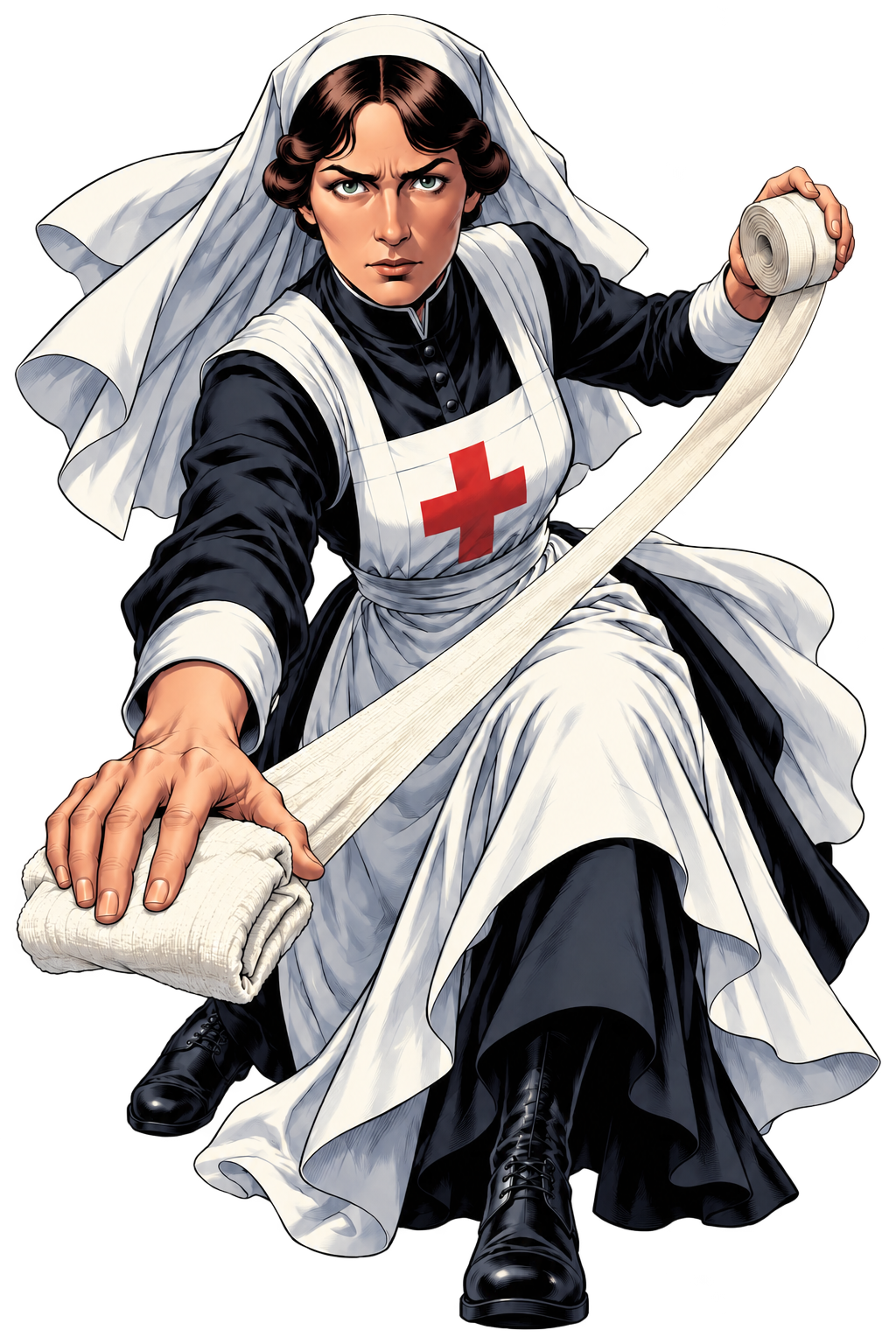
Artistic portrait of Edith Cavell
V

Edith Cavell

Nursing, service and moral courage

Before Edith Cavell became a monument, she was a working nurse and teacher. Trained at the London Hospital, she went to Brussels in 1907 to lead a nursing school. Her contribution to Belgian nursing was already substantial when the German occupation brought a different set of demands.

Her hospital treated Allied and German wounded. Alongside that work, she helped Allied soldiers escape occupied Belgium through a resistance network. These were distinct commitments: care for the wounded regardless of nationality, and active assistance to men trying to reach safety. Neither is well served by reducing her life to a patriotic slogan.

Cavell was arrested in August 1915 and executed by firing squad on 12 October. Commemoration often begins with that final morning. Her place here also belongs to the years before it: the training of nurses, the care of patients, and the work she continued under occupation.

Sources: National Portrait Gallery: Edith Cavell; National Army Museum: Cavell and the wounded.