

CBRN Medical
Medical care after chemical, biological, radiological or nuclear exposure, for military and prehospital settings.
16 modules · 96 decision checks · 32-question final assessment
Enrolment is being prepared.
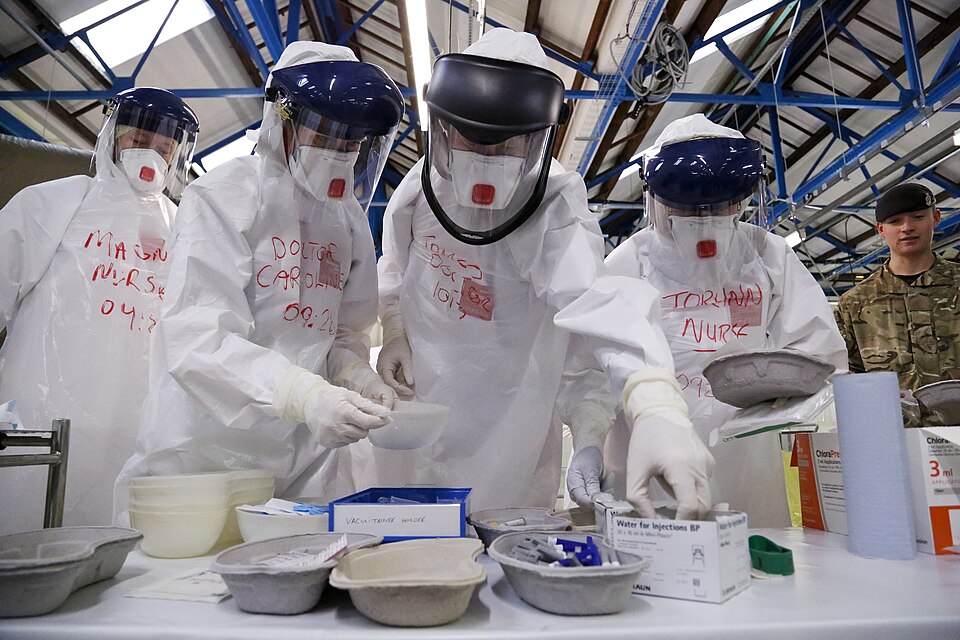
Teamwork with restricted visibility
NHS personnel rehearse care in protective equipment before deployment to Sierra Leone, 2014. Not a current PPE protocol.
Image source and licence
DFID - UK Department for International Development · Source · CC BY 2.0Monochrome display; full photograph retained. Original image available.Medics from across the NHS practise in full Personal Protective Equipment (PPE) (15649499108).jpg
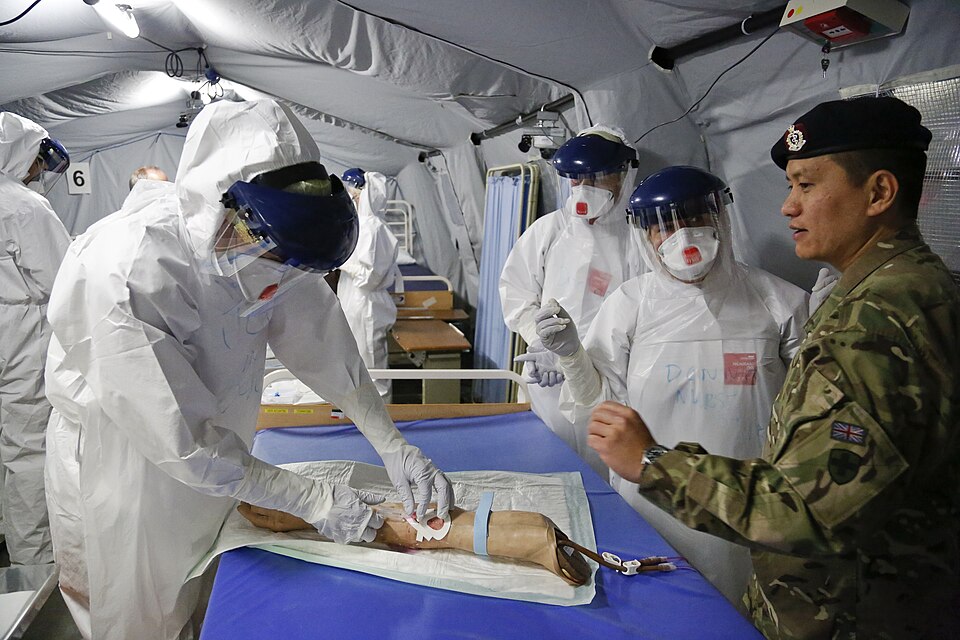
A practical task in full PPE
NHS personnel practise taking blood from a simulated arm at the Army Ebola training facility near York, 2014.
Image source and licence
DFID - UK Department for International Development · Source · CC BY 2.0Monochrome display; full photograph retained. Original image available.Practising taking blood in Ebola saftey suits (15649429018).jpg
From recognition to clean onward care
Learn the CRESS assessment: consciousness, respiration, eyes, secretions and skin. Study how CBRN agents cause injury, then practise decontamination decisions and transfer between contaminated and clean areas. Cases cover scene safety, triage, evacuation and recovery.
- IRecognise the hazard
- IIResponder safety and protective equipment
- IIICRESS and the quick look
- IVNerve agents: synapse to respiratory failure
- VNerve-agent care and countermeasures
- VIPulmonary agents and toxic inhalation
- VIIVesicants and contaminated wounds
- VIIICyanide, carbon monoxide and cellular hypoxia
- IXBiological casualties and infection control
- XRadiation: exposure, contamination and tissue injury
- XINuclear incidents and combined injury
- XIIDecontamination decisions and casualty welfare
- XIIIEstablish and control the clean/dirty line
- XIVTriage and treatment under contamination constraints
- XVEvacuation, reporting and AT-MIST-D
- XVIIntegrated response, recovery and retention
Practice, assessment and certificate
Eight constructed drills cover CRESS patterns, decontamination choices, boundary placement, a contamination breach and an integrated casualty response. Six checks in each module support revision. The final assessment samples every module, is marked by the server and requires 80% to pass. A verified completion certificate includes your name, score, date, course version and reference.
The certificate records educational completion. Current local procedures and practical training remain essential. Study progress can be saved and restored through Learning & CPD.
Evidence and scope
Teaching draws on the MACHAΩN doctrine corpus, including NATO AMedP-7.1 Edition A Version 1 and the military CBRN Medical TAM, with separately labelled UK and supporting clinical sources. Each lesson, question and drill decision retains a source locator and setting. Source details are available within the course.
Evidence standards