
Classical history
The Greco-Roman world: healers, soldiers and the evidence they left behind.
About this history
History and interpretation. Ancient practices are not treatment guidance.
The wounded warrior
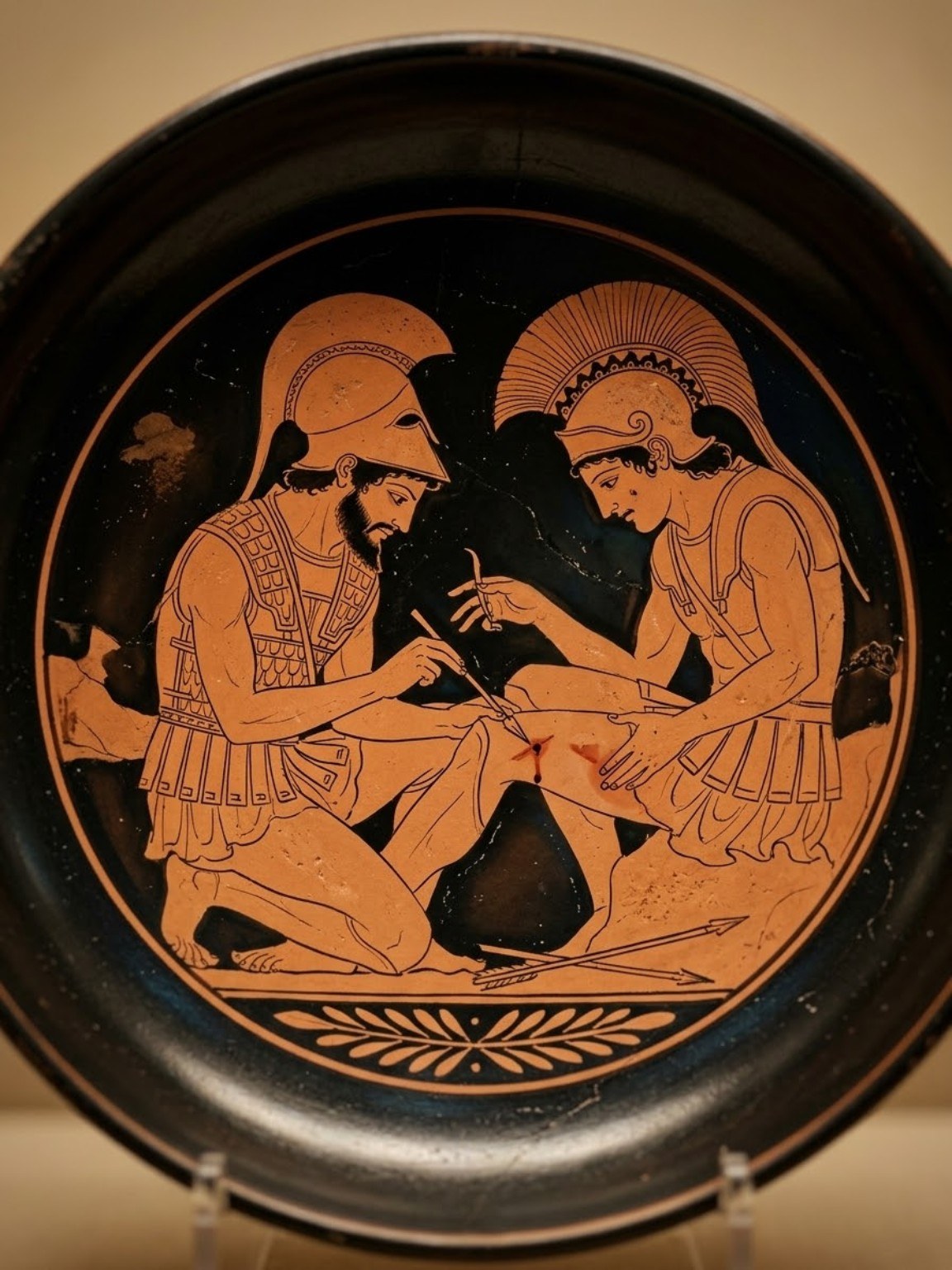
In the Iliad, Machaon and Podalirius belong to the world of warriors and healers. Achilles tending Patroclus is another enduring image of care among comrades. These accounts belong to epic and mythology.
MACHAΩN takes its name from Machaon.
Sources and historical context
National Library of Medicine: Greek Medicine, Olympian Healers
Observation becomes a discipline
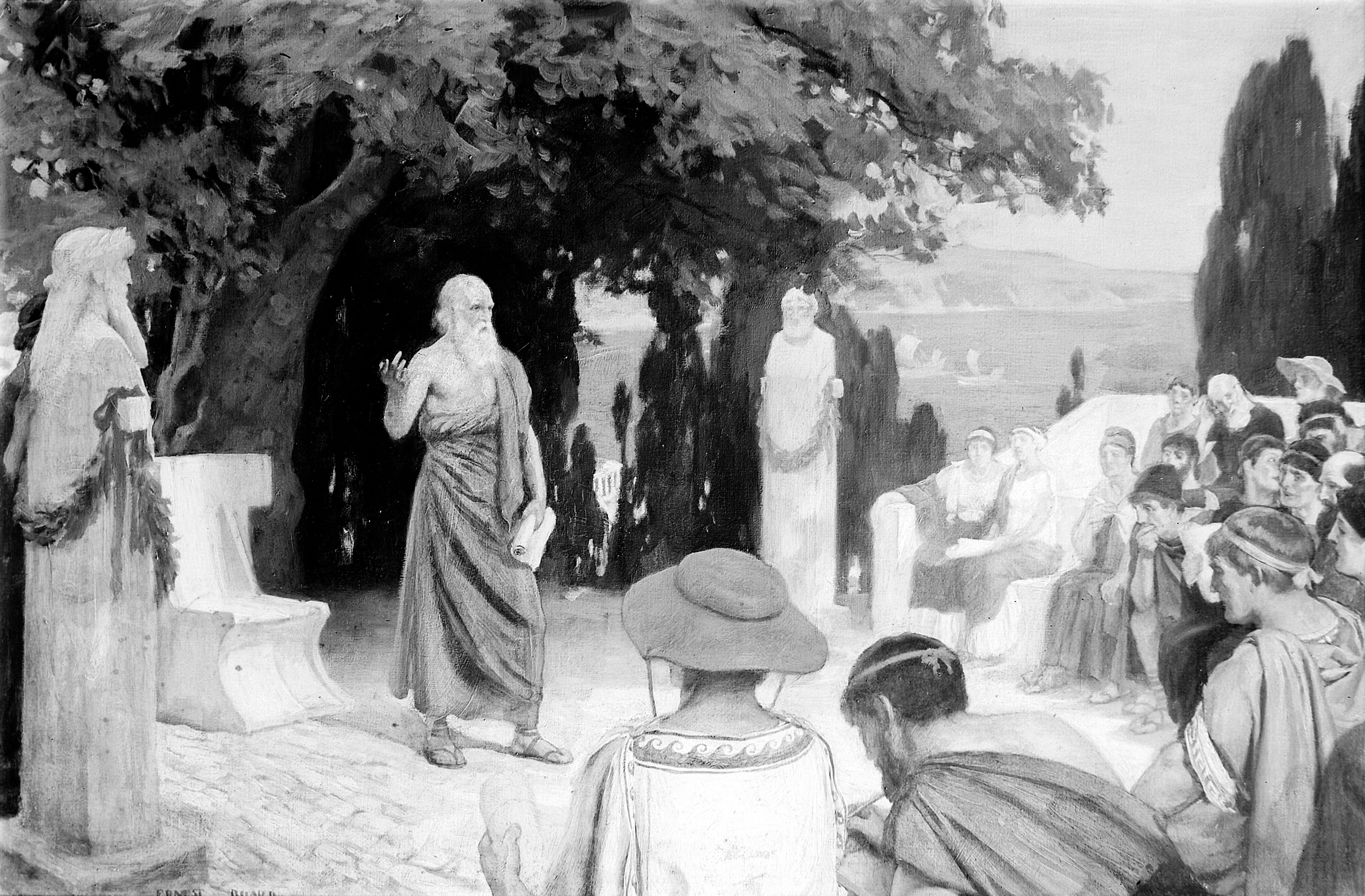
The Hippocratic writings gave observation and reasoning a central place in medicine. The collection has multiple authors and contains conflicting ideas.
The humoral explanations used in antiquity differ from modern physiology.
Sources and historical context
Hippocrates teaching
Hippocrates teaching beneath a plane tree, after an oil painting by Ernest Board. Photograph made in 1929.
Image source and licence
Ernest Board (painting); unrecorded photographer / Wellcome Collection · Source · Attribution 4.0 International (CC BY 4.0)Original colours and full image retained; scaled for display.M0000138: Hippocrates lecturing to his students under the plane tree
Care on campaign
The Roman army maintained medical personnel who cared for soldiers at forts and camps and supported them on campaign. The British Museum’s Legion exhibition describes permanent regimental medics and campaign hospitals.
Sources and historical context
British Museum: Legion, life in the Roman army, education activity cards
Greco-Roman medical instruments
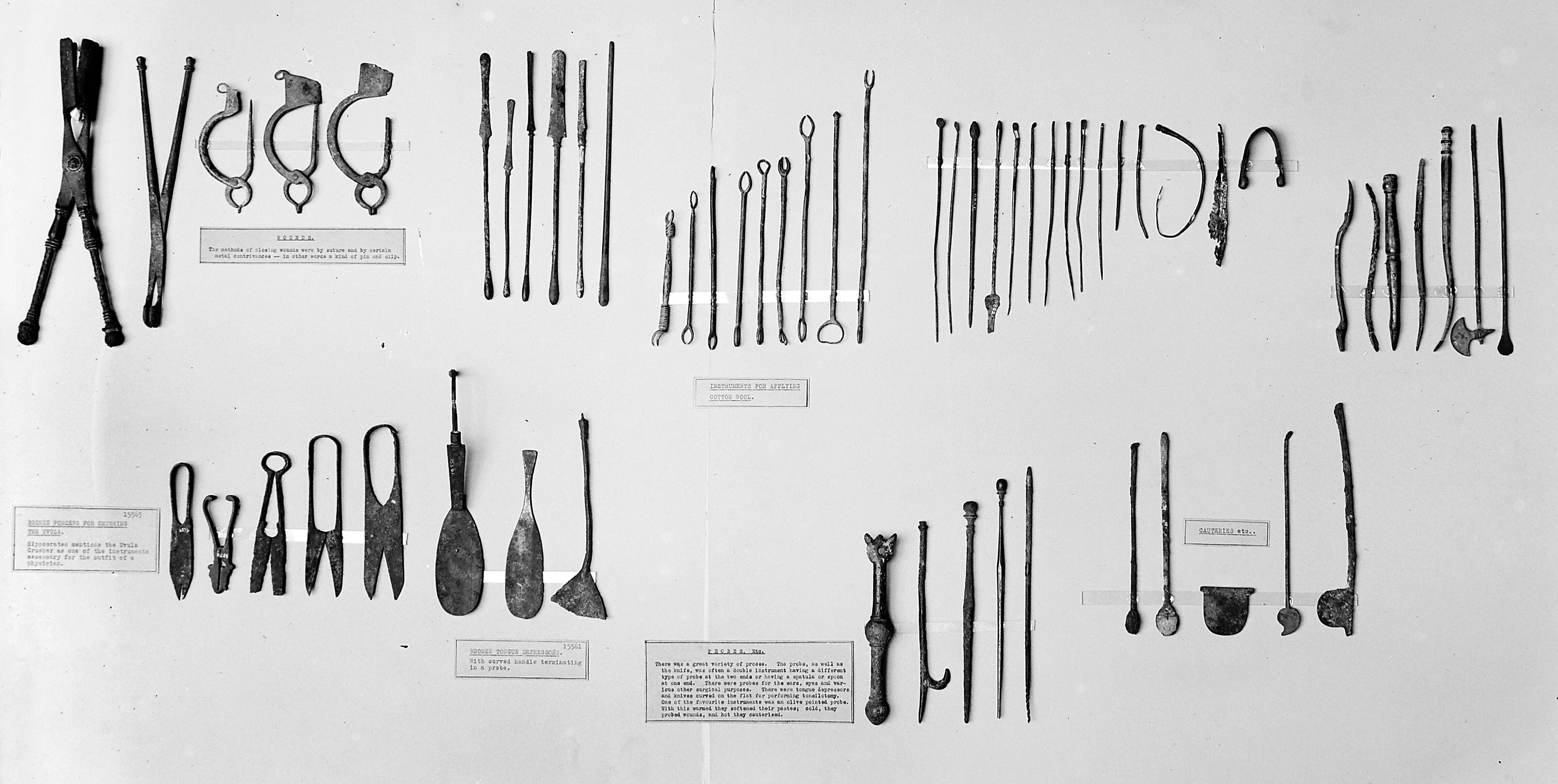
Greco-Roman medical instruments in a museum display, photographed in 1929.
Image source and licence
Unrecorded photographer / Wellcome Collection · Source · Attribution 4.0 International (CC BY 4.0)Original colours and full image retained; scaled for display.M0000359: Greco-Roman bronze medical instruments
What an instrument can tell us
This bronze scalpel is catalogued by the Metropolitan Museum of Art as Roman, from the first to second century CE.
The catalogue does not establish battlefield use.
Sources and historical context
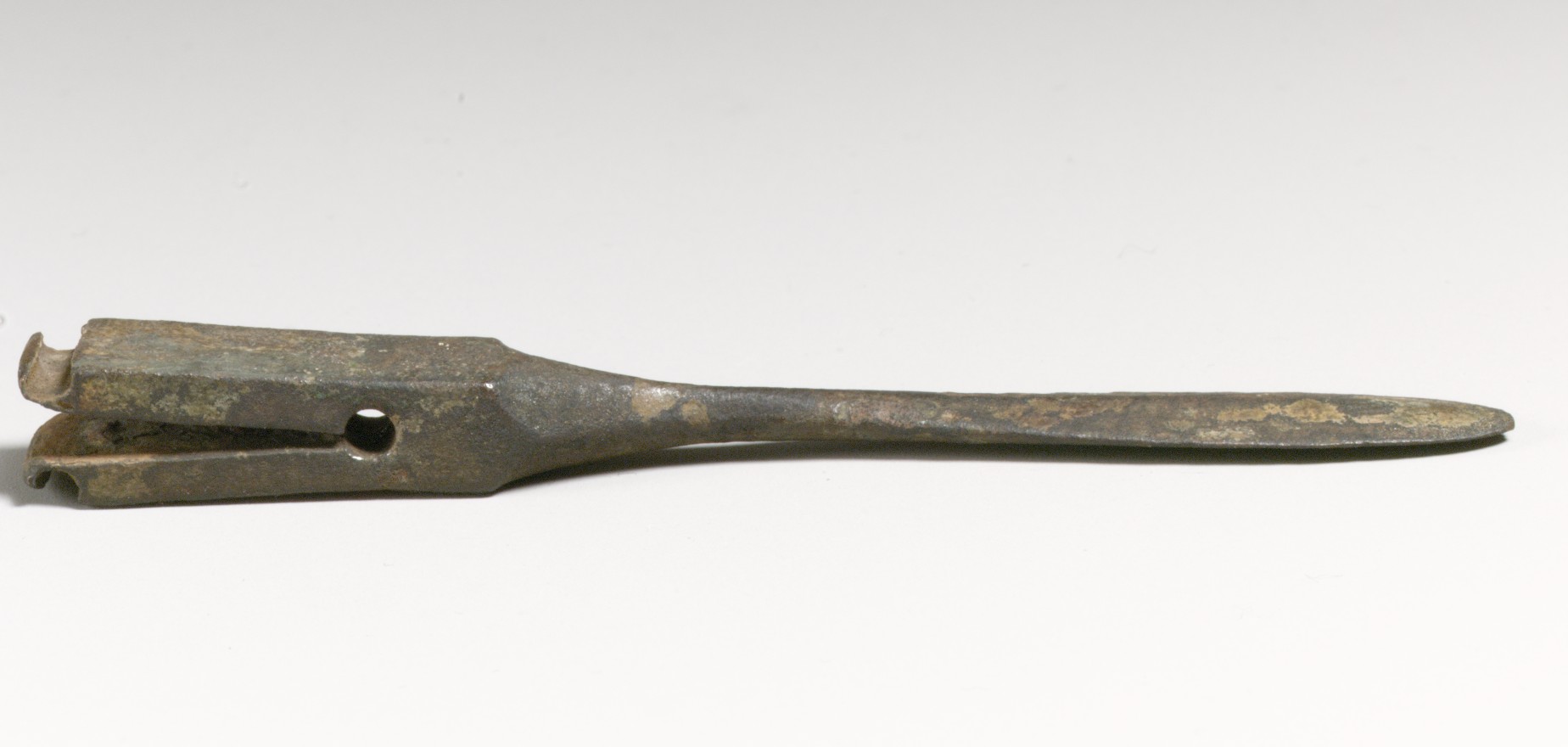
Roman bronze scalpel
Roman bronze scalpel, first to second century CE. Historical instrument.
Image source and licence
Unrecorded maker / The Metropolitan Museum of Art · Source · CC0 1.0 / Public domain, Met Open AccessOriginal colours and full image retained; scaled for display.Bronze scalpel
Medicine passed between generations
Medical texts carried Greek ideas into later cultures. The Hippocratic Oath has been translated and adapted repeatedly. The pages shown here come from an 1818 publication.
Sources and historical context
National Library of Medicine: the Hippocratic Oath; image edition recorded by Wellcome Collection
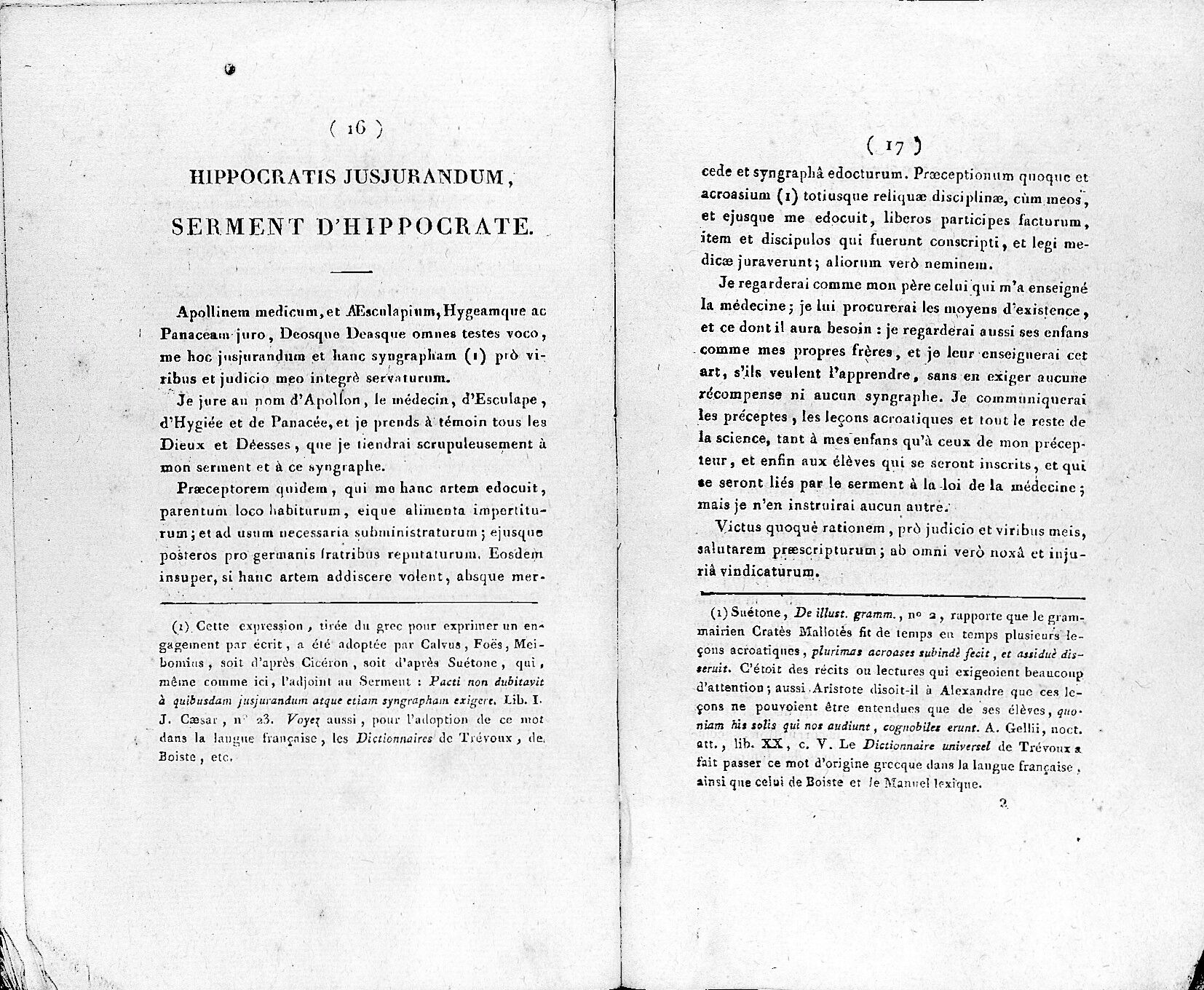
The Hippocratic Oath, 1818 edition
Pages from Jacques René Duval’s Serment d’Hippocrate, published in Paris in 1818.
Image source and licence
Jacques René Duval / Wellcome Collection · Source · Public Domain MarkOriginal colours and full image retained; scaled for display.Serment d'Hippocrate, précédé d'une notice sur les sermens en médecine / Par J.R. Duval.
Later medical history.
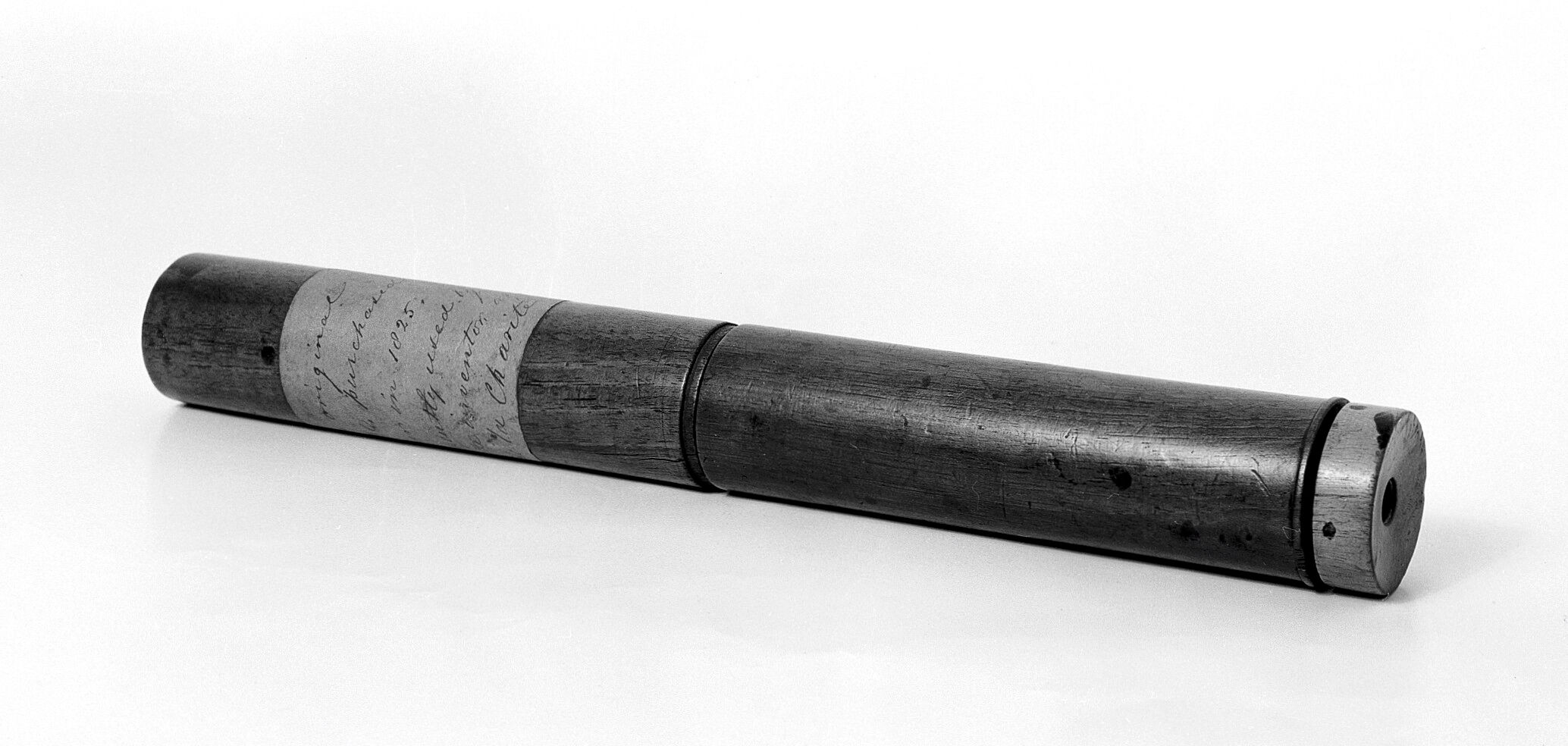
Laennec-type stethoscope
A monaural stethoscope of the Laennec type, purchased by W. W. Fisher in 1825.
Image source and licence
Unrecorded photographer / Wellcome Collection · Source · Attribution 4.0 International (CC BY 4.0)Original colours and full image retained; scaled for display.Monaural stethoscope; Laennec type.
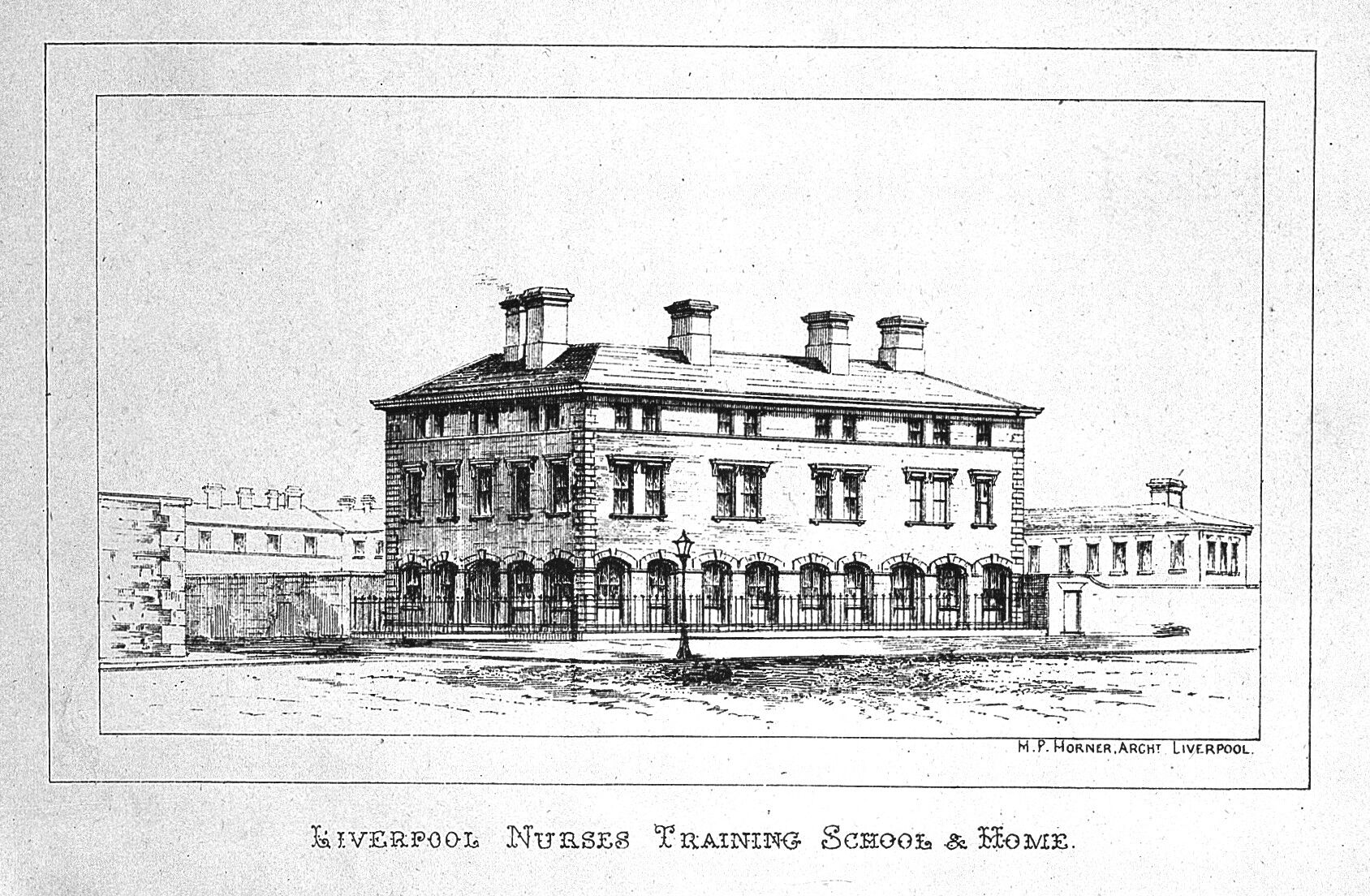
Liverpool Nurses’ Training School
Liverpool Nurses’ Training School and Home, illustrated in Organization of Nursing, 1865. Historical education context.
Image source and licence
Florence Nightingale; William Rathbone / Wellcome Collection · Source · Public Domain MarkOriginal colours and full image retained; scaled for display.Organization of nursing : an account of the Liverpool Nurses' Training School, its foundation, progress, and operation in hospital, district, and private nursing / by a member of the committee of the Home and Training School ; with an introduction and notes by Florence Nightingale.
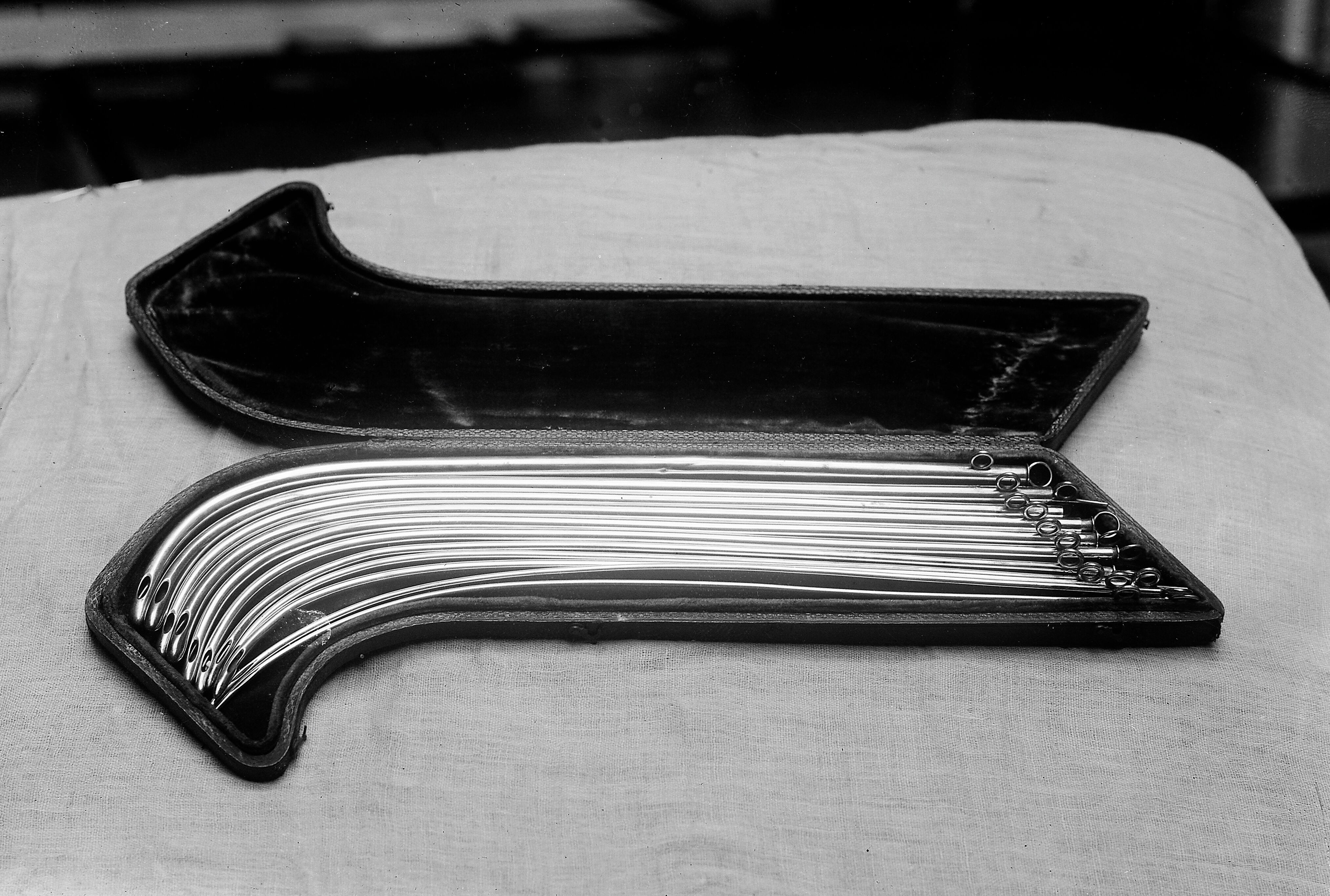
Joseph Lister’s surgical instruments
A case of surgical instruments recorded as used by Joseph Lister, photographed in 1941.
Image source and licence
Unrecorded photographer / Wellcome Collection · Source · Attribution 4.0 International (CC BY 4.0)Original colours and full image retained; scaled for display.M0007769: Case of surgical instruments used by Joseph Lister